
Hyderabad, Oct 30:Birla Institute of Technology and Science Pilani, Hyderabad Campus, is hosting the Symposium on Neuroengineering and Neuroeconomics. Being hosted from 29th to 31st October 2026, the three-day event has brought together globally renowned researchers, clinicians, engineers, and technology experts, along with industry leaders, to discuss the latest developments in neuroscience, medicine, engineering, artificial intelligence, and economics.
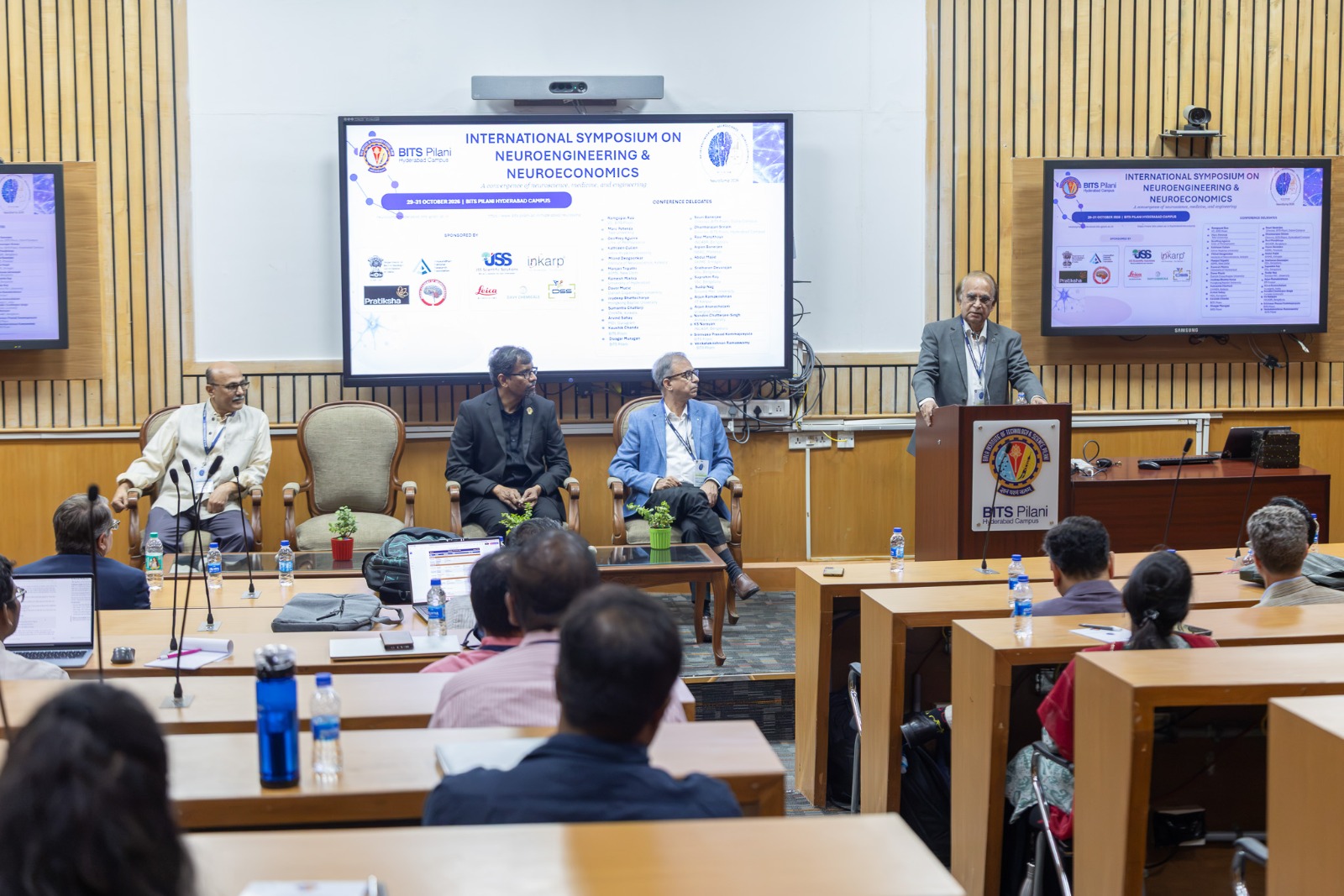
BITS Pilani Hyderabad Campus organized the Symposium with support from the Department of Biotechnology, Government of India, the Anusandhan National Research Foundation, Pratiksha Trust, the Indian Academy of Neurosciences, and other private sponsors.
Held under the theme “Building a National Consortium and Developing Training Pathways,” the symposium focused on bringing together expertise from neuroscience, medicine, engineering, artificial intelligence, and management to strengthen neuroengineering research and develop new technologies for healthcare, rehabilitation, and diagnostics.
The symposium brought together experts from eminent institutions such as the University of Pennsylvania, Yale University, Johns Hopkins University, AIIMS New Delhi, JNCASR Bengaluru, IISc Bengaluru, National Brain Research Centre, IIT Kanpur, Ashoka University, Management Development Institute, and CHINTA Kolkata, among others.
Highlighting the importance of interdisciplinary research, Prof. Mohan Rao Chintalagiri, Sr Professor Emeritus said,
“This symposium represents a collaborative initiative between BITS Pilani, Hyderabad Campus, and BITS Pilani, Dubai Campus, bringing together the Departments of Biology, Pharmacy, Electronics & Electrical Engineering, Humanities and Social Sciences, and Computer Science and Information Systems. Through this interdisciplinary collaboration, we aim to develop a new curriculum that fosters neuroscience research and strengthens research capabilities across the BITS Pilani institutions”
During the symposium, participants, through keynote addresses, scientific sessions, panel discussions, and research presentations covered brain-machine interfaces, neural implants, neuroimaging, computational neuroscience, deep brain stimulation, cognitive neuroscience, and neuroeconomics.
A key area of the symposium was to bridge the gap between fundamental neuroscience research and practical applications. Experts discussed opportunities to develop indigenous neural interfaces, medical devices, wearable technologies, and AI-powered diagnostic solutions, while strengthening collaboration between academic institutions, healthcare professionals, and the emerging neurotechnology industry.
Speaking at the inaugural, Prof Souri Banerjee, Director, BITS Pilani Dubai Campus stated,
“We are witnessing growing mental health concerns, particularly among young adults. The complexity of the brain, coupled with emerging challenges related to digital habits and behavioural health, calls for stronger clinical frameworks to identify concerns early and develop effective interventions. Artificial intelligence also holds significant potential in helping us recognise and address these issues. Over the next three days, we hope this symposium will foster interdisciplinary discussions and help us find answers to some of these pressing questions.”
The symposium also focused on building a national network of researchers, clinicians, engineers, and industry partners to support collaborative research and develop specialised training programmes in neuroengineering. The discussions highlighted the need to bring together expertise from different disciplines to strengthen India's capabilities in this emerging field.
Building on its strengths in neuroengineering research and innovation, the organisers have proposed holding the symposium every two years to continue discussions, strengthen research collaborations, and support the growth of India's neuroengineering ecosystem.